Category Archives: vegetables

Suzanne Carter at Henry Haight School Garden

20150211_0058

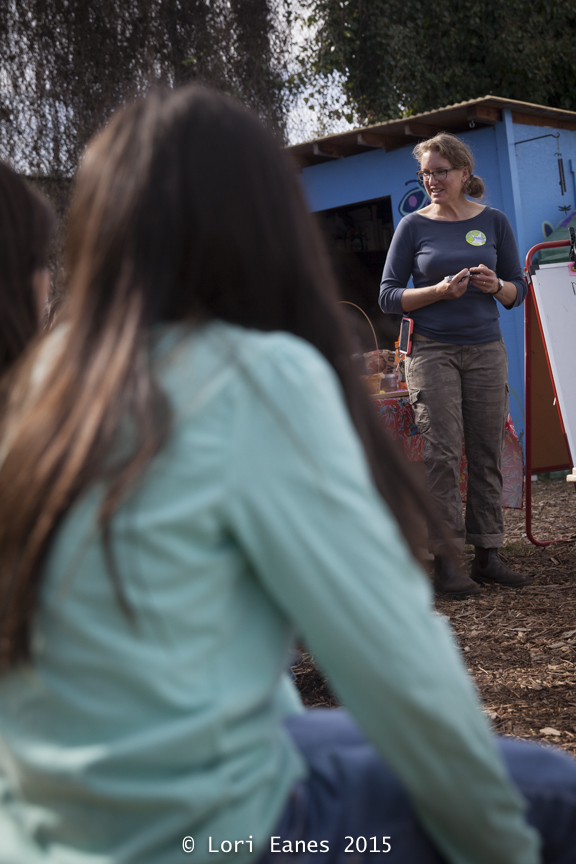
Where does food come from? Suzanne Carter got a good laugh when she heard a first grader proudly proclaim that “honey comes from the honey bee tree.” Being able to teach kids first-hand about where food comes from is one of the reasons she volunteers at her son’s elementary school garden. Three days a week she works with 240 kids, teaching them gardening skills, botany, nutrition as well as geometry and math, all using the garden as inspiration.

The idea for a teaching garden started in 2011 with no budget but lots of community support. The school’s Go Green Committee came up with the plan to turn an unloved corner of the play field into an educational garden. In January of 2012, Alameda’s then supervisor Wilma Chan organized contractors to build a shed, and a local Boy Scout troop made raised beds. Later 175 people came out to a work party to help mulch, dig and plant.

Suzanne joined in right from the beginning working with a teacher to create the garden program. She graduated with an Anthropology degree but lately she has become more interested in plants. Besides volunteering at the schools garden program she also runs her own landscaping business, Urban Gardening. At the school’s gardening program she also helps write grants to get stipends for supplies.
20150211_0099

20150211_0110

When I visited last week, the winter garden was going strong with 13 raised beds of spinach, lettuces, kale, fava beans, herbs, edible flowers and more. They had a giant compost bin and a worm box, and activity area with benches and tree stump stools.

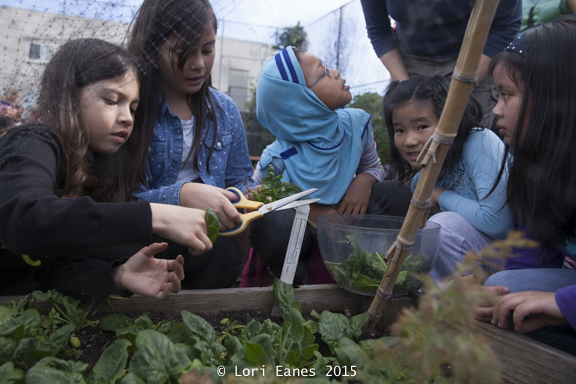
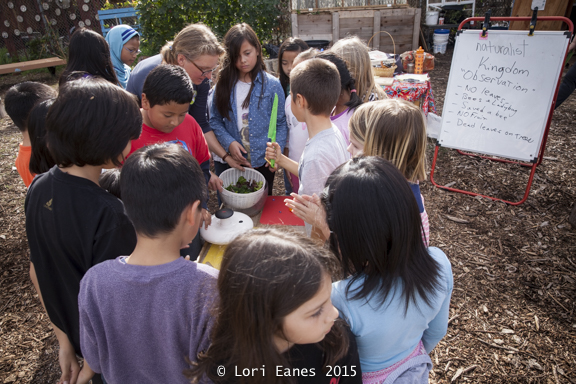
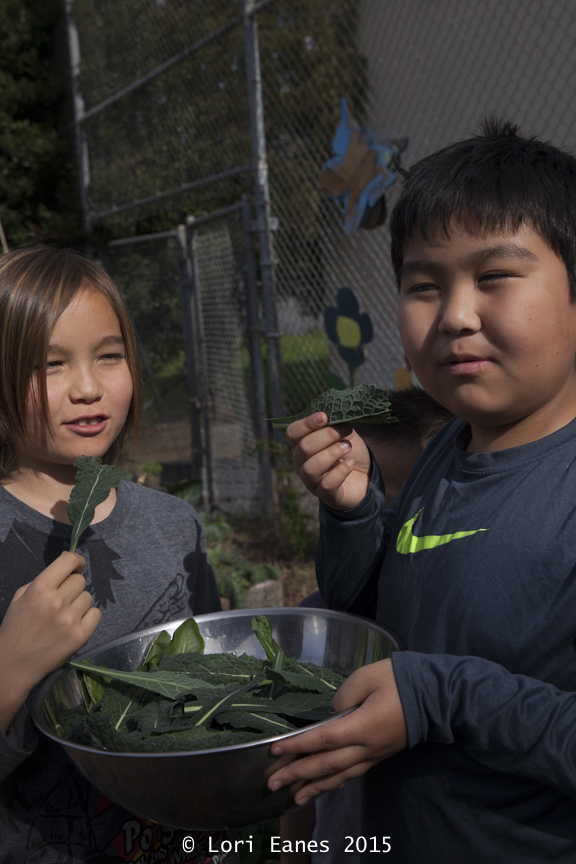
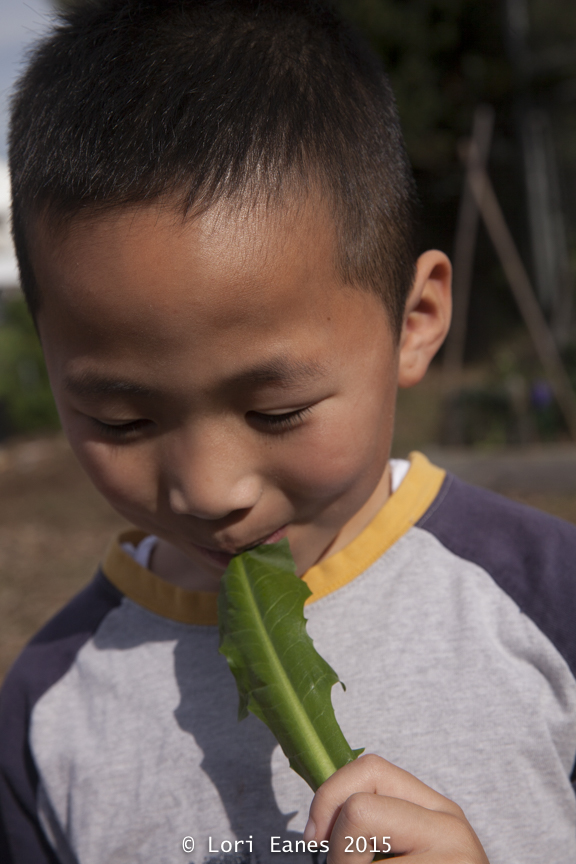
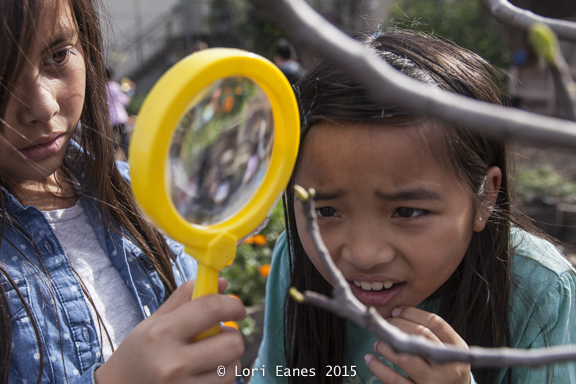
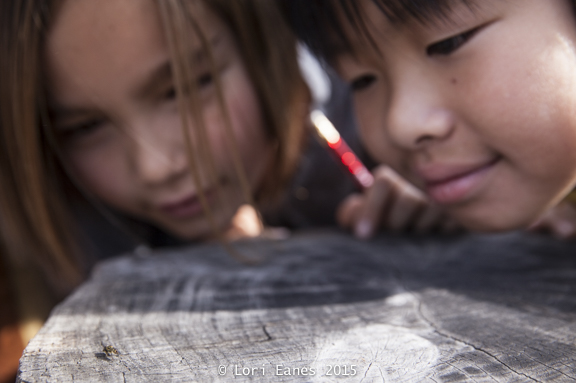
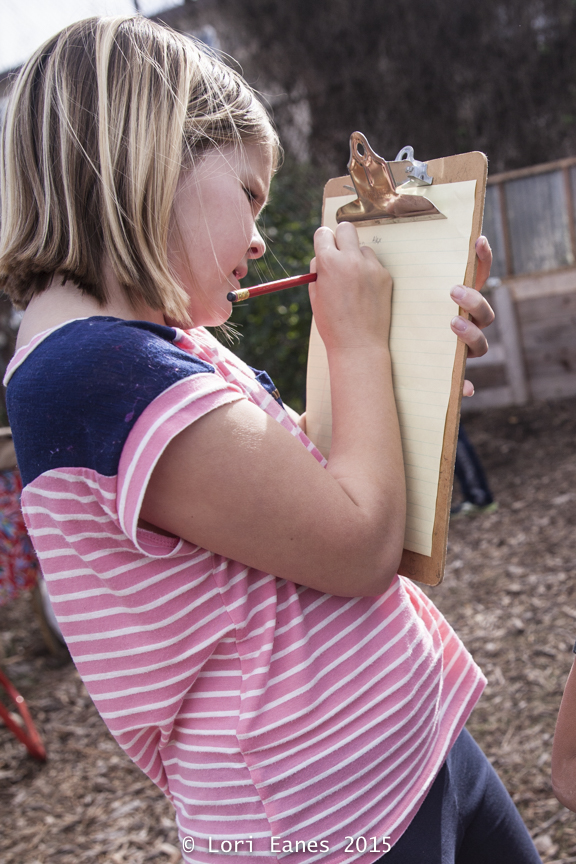
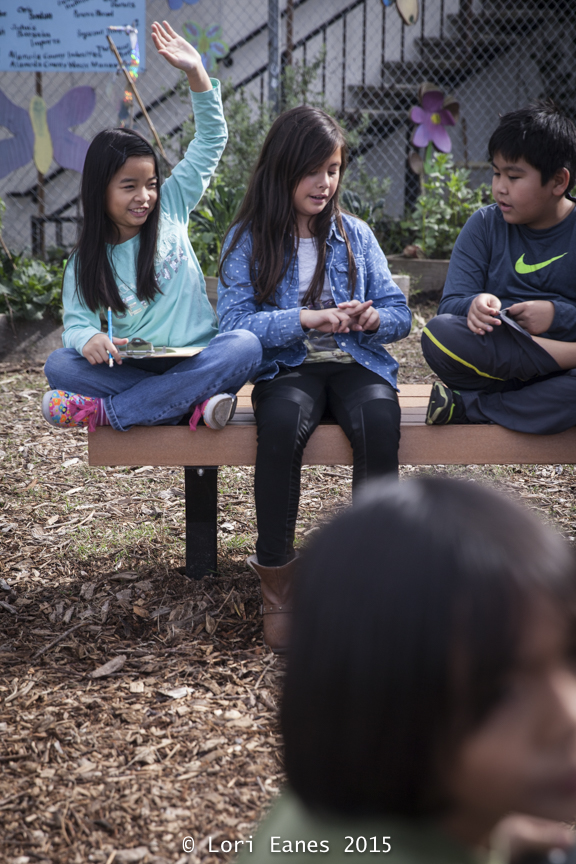
The third and fourth graders I met were observing evidence of winter in the garden, looking through magnifying glasses and taking notes on clipboards. The kids found that the fruit trees did not have fruit or leaves, but they did have buds. They were fascinated by the insects. Later they talked about their observations and then picked spinach, kale, Italian dandelion leaves, baby lettuce and edible flowers. Suzanne says the kids let her know what they are really interested in but she provides the basics first. “Sustainability, energy use and eating are the big three”, she says. At the end of class the kids helped make an organic gourmet salad that would rival one you’d find at an expensive restaurant. She says the kids have debated which of the vegetables is the best. Lately kale has been the winner.
20150211_009020150211_0117


20150211_0137

20150211_0168

20150211_015620150211_0158

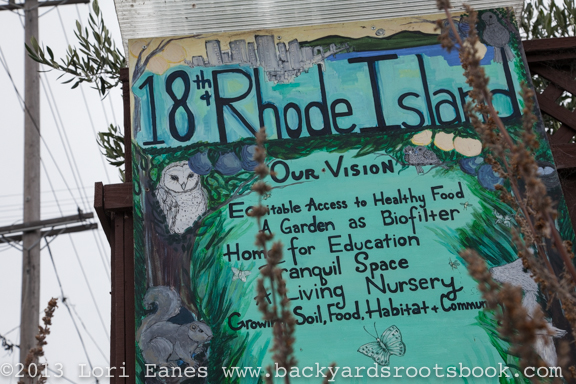
The 18th + Rhode Island Street Permaculture Garden In San Francisco


20140625_0079

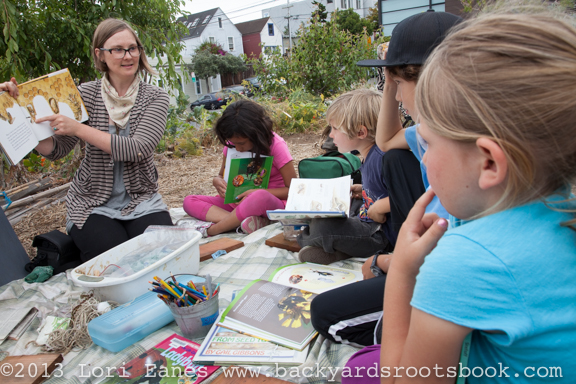
Dominique Piccinino teaches kids about bugs at the 18th and Rhode Island Street Permaculture Garden.

I recently read in SF Gate that San Francisco has just taken the first step into giving landowners a tax incentive to letting their empty lots be used for agricultural and educational purposes. The bill still has to be approved by the Board of Supervisors but is expected to pass as early as mid-July. Only empty lots would be eligible and properties would have to remain undeveloped for a minimum of five years. The hope is the bill would be to prevent urban blight and increase green spaces. Lots could even be used for bees and livestock- think of the farming possibilities!

To see what can be done with an empty lot, I visited an amazing permaculture garden at 18th and Rhode Island Streets on Potrero Hill. It got its start back in 2008 when the owner, Aaron Roland, read a story in the SF Chronicle about using vacant lots to grow food. The writer wrote about Kevin Bayuk who had found over a thousand vacant lots even in the dense city of San Francisco. His idea was to try to find owners willing to let their land be used for urban agriculture. When Aaron read the story he contacted Kevin and offered the space to be grown for food.

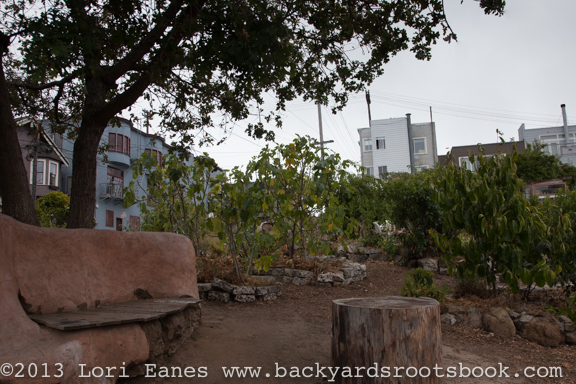
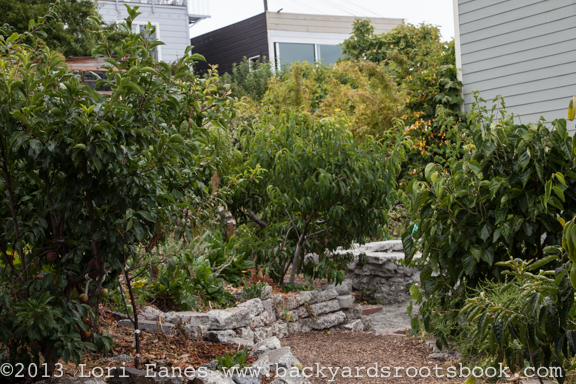
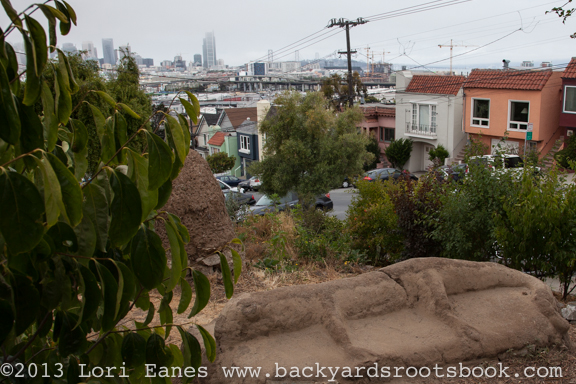
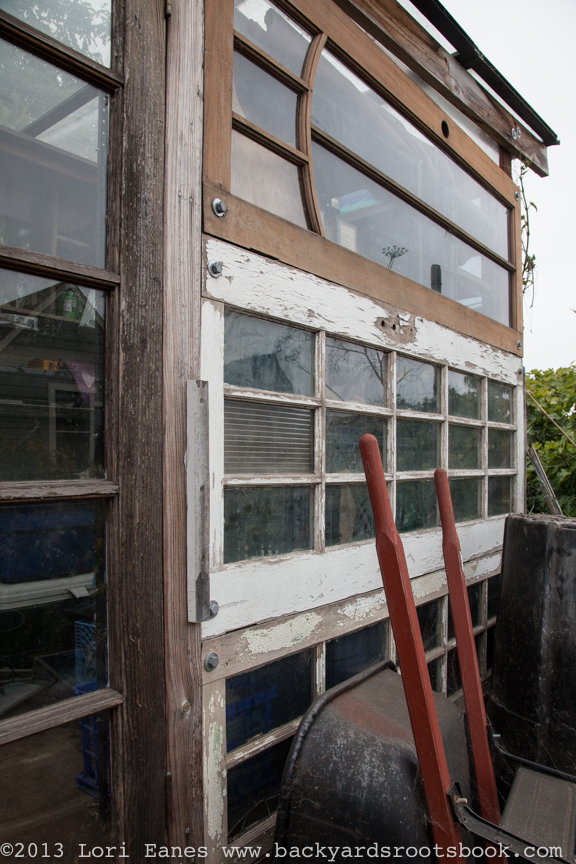
Since then, the sloping property has become a community garden developed with the principles of permaculture with help by project developer David Cody, permaculture students and the community. A good history of the project can be read in The Potrero View. The design works with nature but faster: building up the soil and catching and retaining rainwater in swales. The lot doesn’t look like your typical vegetable garden with rows of vegetables in square beds. Instead paths follow the contours of the hill with recycled concrete retaining walls The plots are planted heavily with fruit trees and many perennial vegetables that require less water. I noticed dwarf varieties of fig trees, apple trees, plums, pears and more. The front of the garden has cob benches that overlook downtown San Francisco and the far end of the property has a greenhouse/shed made of recycled doors. The newest addition is a pond and fish.

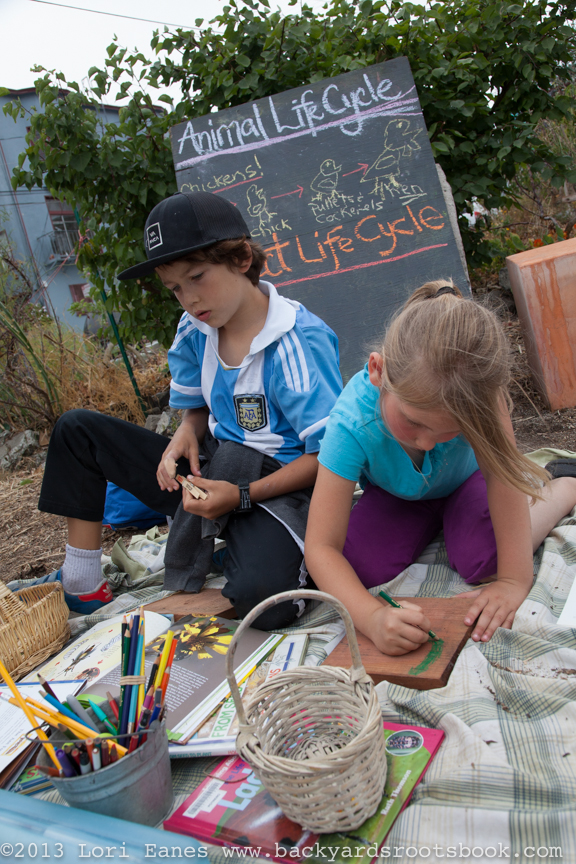
The garden is open to anyone and the day I visited, Branch, an educational program for kids was having a summer camp there. Kids were learning about bugs, picking fruit and making sun tea. It’s a great way to get kids into nature and there’s still two weeks left of summer camp with Branch and spots are available. Look here for more info.

It goes to show you there’s plenty of potential in an empty lot. Visit the garden and find out how to get involved on their Facebook page.

20140625_0087

Kids work on artwork in a Branch summer camp at the 18th + Rhode Island Street Permaculture Garden in San Francisco.

20140625_0061

The front of the garden has cob benches overlooking the San Francisco skyline.

20140625_0063

Paths through the garden are mulched, beds have recycled concrete retaining walls.

20140625_0042

20140625_0049

A greenhouse/shed made from recycled doors.

20140625_0051