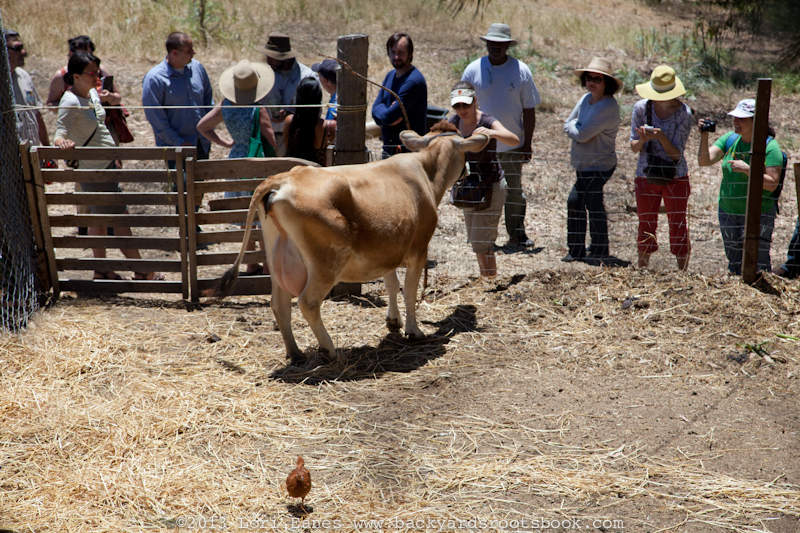
You’d think these city folks have never seen a cow…oops, I guess I was one of them…
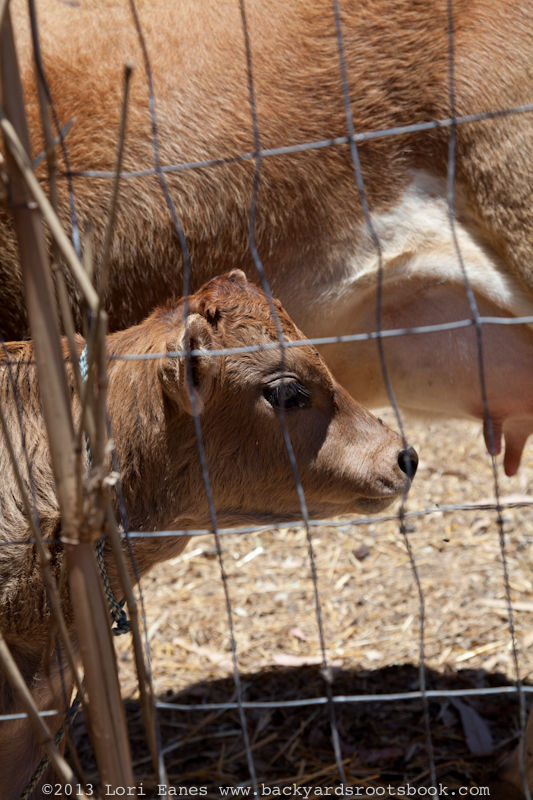
Cocoa, Ginger’s three week old calf drinks 1-2 gallons of milk a day.
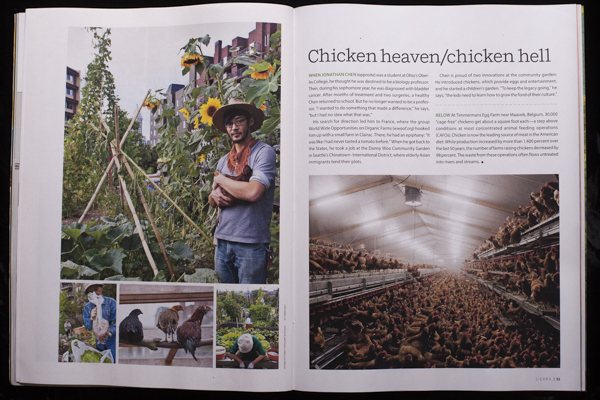
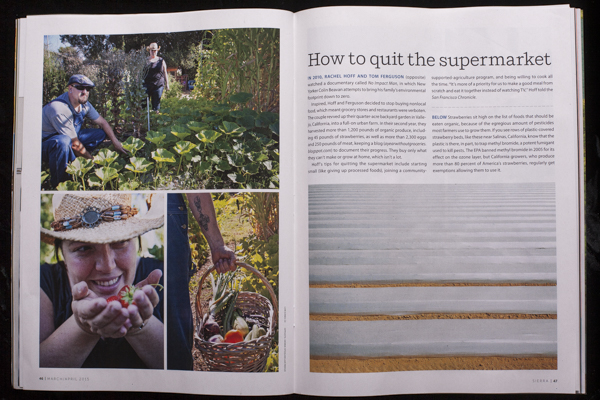
I went back and visited Soulflower Farm this past Saturday on the Institute of Homesteading’s annual urban farm tour. Their large 2 1/2 acre urban farm in El Sobrante is definitely the biggest urban farm I visited and there was a lot to see. Nevada and Maya gave tours all day and I was excited to share Backyard Roots with visitors.
Ginger, the Jersey cow stole the show with her three-week-old calf, Cocoa. Maya gets 3-4 gallons a day from Ginger and to keep up with it, she makes cheese every day. According to Wikipedia, “Jersey cows are a small breed of dairy cattle, originally bred in the Channel Island of Jersey. The breed is popular for the high butterfat content of its milk and the lower maintenance costs (because of its smaller size), as well as its genial disposition.” Ginger was not only an easy going mom, she was a beautiful creature. Maya hopes to breed her in the future for smallness, so her lineage could benefit urban farmers.
Their hillside farm is shaping up and although some visitors mentioned they wouldn’t want to farm on a hill, Nevada explained how irrigating a slope with greywater and rain catchment tanks has advantages, mainly how easy it is to work with gravity. They use greywater from their washer and shower as one of their main irrigation methods. They also use rainwater catchment that has the advantage of not being treated with chloramine (an ammonia based derivative added to tap water that kills bacteria) The problem with chloramine is it kills the helpful bacteria in the soil that plants need. Nevada has several large tanks to catch rainwater and he wants to collect more. He said an hour of rainfall can fill his 350 gallon tank!
Another interesting idea they are trying out is using their large flock of broiler chickens for pest management. Read about it in their latest blog posting and to find out about upcoming workshops. The next one is building with super adobe. Check it out.
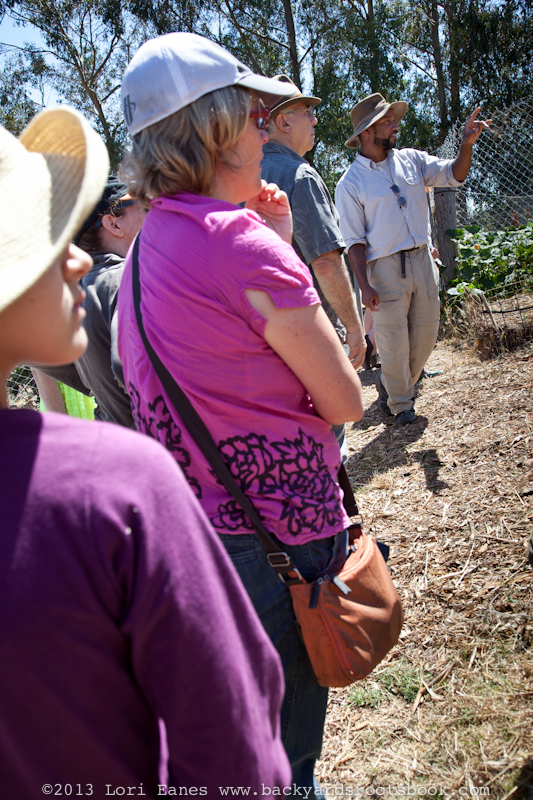
Nevada explains how the greywater and rain catchment system works on his hillside farm-(hint—gravity helps a lot).
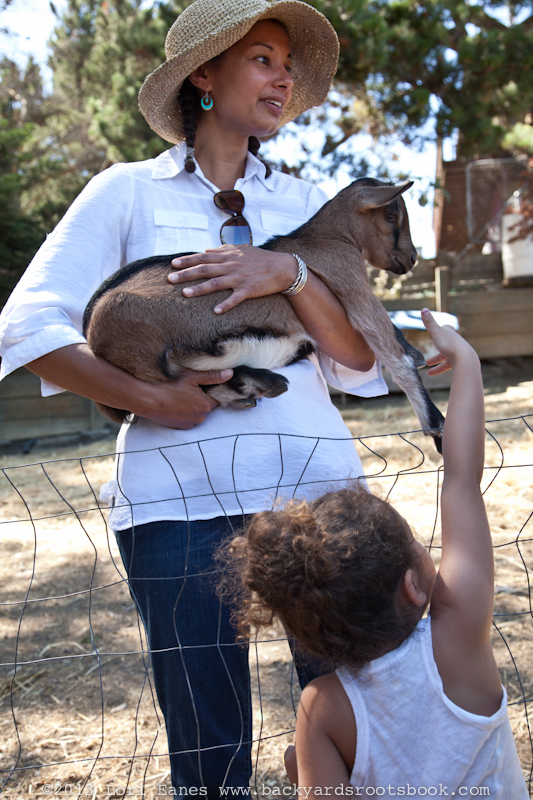
Maya holds another new addition, a three-week-old kid